When the Clinic Becomes a Sanctuary
The aesthetic clinic is being redesigned — softer, slower, and more like a sanctuary than a surgery. Behind the architecture lies a deliberate rethinking of what people come for.
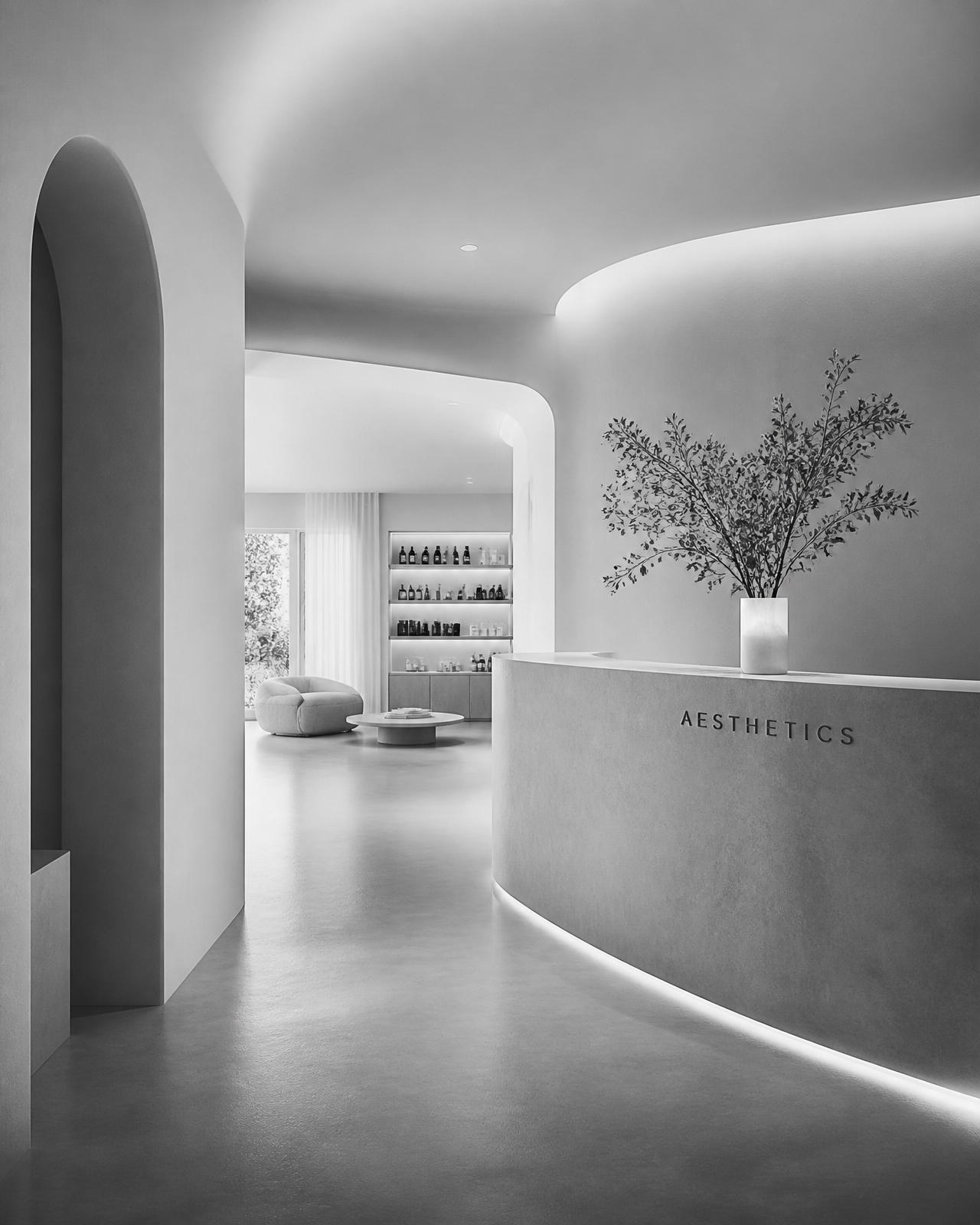
Walk into a newly opened aesthetic clinic and the first thing you notice is what is missing. The clinical white, the strip lighting, the faint anxiety of a medical waiting room — much of it has been deliberately designed away. In its place: warm materials, soft curves, considered lighting and a hush more often associated with a spa or a private members'' club than a place of treatment.
This is not merely decoration. It reflects a strategic reinvention of what the aesthetic clinic is for. The most ambitious operators have understood that they are no longer selling discrete procedures but an experience — and that the experience now extends well beyond the treatment itself, into how a client feels from the moment they arrive.
The logic is partly commercial. Aesthetic treatments have become more numerous, more competitive and, in many categories, more similar. When the procedures themselves converge, the differentiation moves elsewhere — to atmosphere, to service, to the sense of being cared for. A clinic that feels like a sanctuary can command loyalty in a way that one defined purely by its equipment cannot.
But it is also a response to how clients have changed. The same people seeking these treatments are immersed in a broader culture of wellness, accustomed to thinking about their appearance as one facet of a wider project of self-care. For them, a treatment that feels transactional sits oddly against the values they bring to everything else. The clinic-as-sanctuary speaks their language.
This convergence of aesthetics and wellness is reshaping the business itself. Clinics increasingly offer not single appointments but memberships and programmes, framing care as an ongoing relationship rather than an occasional purchase. The treatment menu expands to include the adjacent and the restorative — recovery spaces, longevity consultations, services that blur the boundary between looking well and being well.
There are risks in the strategy. Wellness is a notoriously elastic word, and a clinic that drifts too far into atmosphere can lose the clinical credibility that justifies its prices in the first place. The most successful operators hold a careful balance — the reassurance of genuine medical expertise wrapped in the comfort of a restorative environment. Lose either side and the proposition weakens.
Done well, though, the model is quietly powerful. It recognises that people do not come to these spaces only to change how they look. They come, increasingly, for a feeling — of being attended to, of stepping out of the noise, of investing in themselves in a way that registers as care rather than vanity. The architecture of calm is, in the end, an architecture of trust.
The aesthetic clinic of the next decade may look less like a medical office and more like a retreat. Behind the soft lighting and the quiet, that is a deliberate and increasingly sophisticated business decision — and one that tells us a great deal about what people are really seeking when they walk through the door.
References
- Smith M, Kelly E. The wellness movement in aesthetic medicine. Journal of Aesthetic Nursing, 2021.
- Global Wellness Institute. The Global Wellness Economy Report, 2023.
- Csikszentmihalyi M. Flow: The Psychology of Optimal Experience. Harper & Row, 1990.
- Ulrich RS. View through a window may influence recovery from surgery. Science, 1984.