The Microbiome Is Quietly Rewriting Skincare
Beneath every routine lives an invisible ecosystem of bacteria, fungi and viruses. Science is only beginning to grasp its importance — and skincare is slowly learning to work with it, not against it.
For most of its history, skincare operated on a simple and largely unspoken assumption: that clean skin was skin stripped of as much as possible. Cleansers were judged by how thoroughly they removed, treatments by how deeply they purged. The language was one of purification, and the unstated ideal was a kind of sterile blankness.
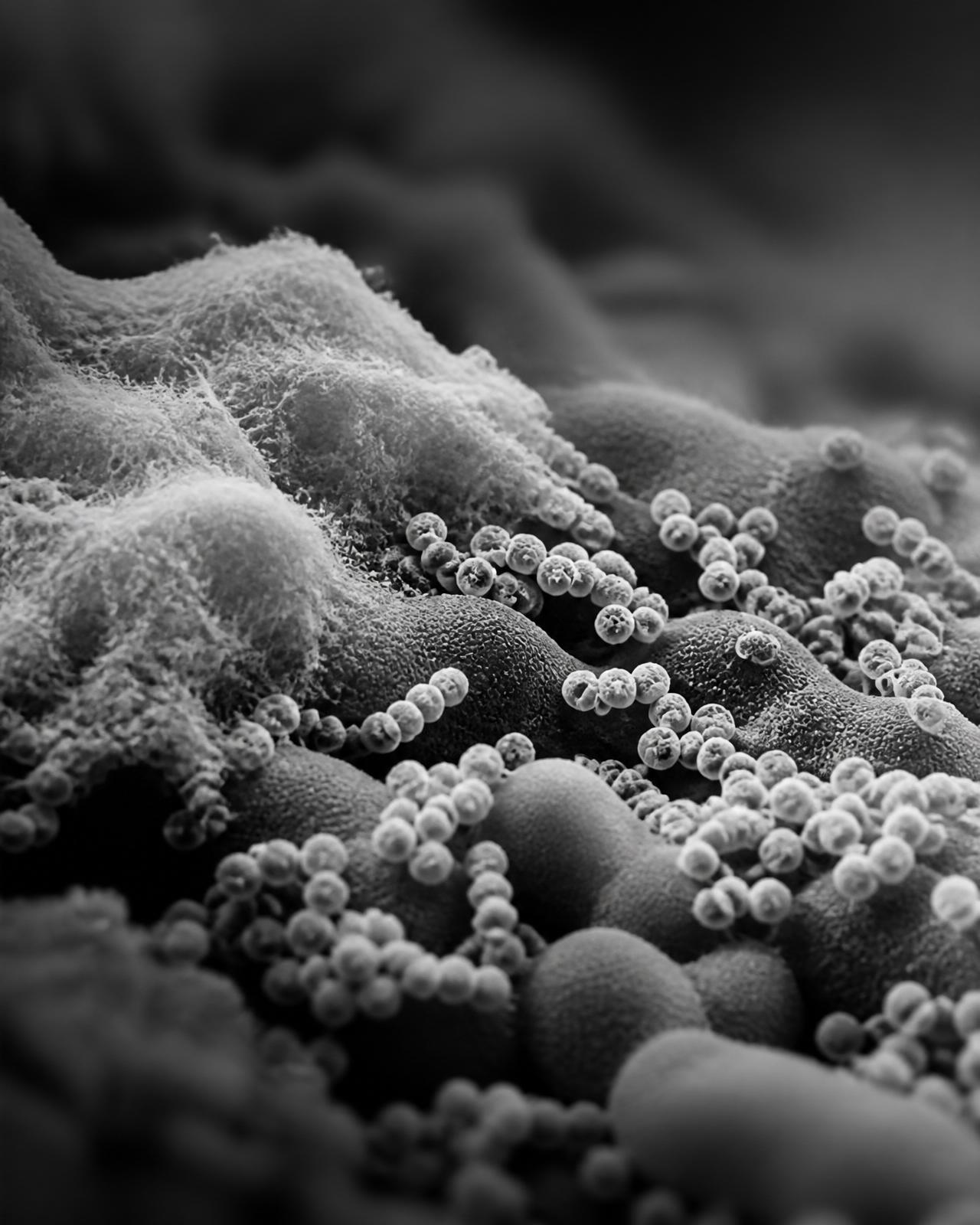
The science of the skin microbiome is quietly dismantling that idea. We now understand that the surface of healthy skin is not a clean slate but a teeming, balanced ecosystem — billions of bacteria, fungi and viruses living in delicate equilibrium with one another and with us. Far from being contaminants, these organisms help defend the skin, regulate its immune responses and maintain the barrier that keeps moisture in and irritants out.
This reframing has profound implications. If the skin is an ecosystem, then much of what we have done to it begins to look less like care and more like disruption. Harsh cleansing, over-exfoliation and aggressive actives can damage not only the skin itself but the community of microbes that protects it. The very pursuit of cleanliness may, in some cases, have been undermining skin health.
The most forward-looking work in the field is learning to think ecologically. Rather than asking how to eliminate, it asks how to maintain balance — how to support the beneficial organisms that keep skin calm and resilient. This is the thinking behind the growing interest in prebiotic and probiotic formulations, designed not to scrub the skin clean but to nourish the ecosystem living on it.
There is a humility in this approach that the industry has not always shown. The microbiome is staggeringly complex, varying from person to person and even from one patch of skin to another, and science is candid that it does not yet fully understand it. The most credible brands resist the temptation to overclaim, treating the microbiome as a frontier to be respected rather than a marketing term to be exploited.
The shift also reframes some familiar problems. Conditions long treated as surface issues — persistent sensitivity, redness, certain forms of breakout — are increasingly understood as signs of an ecosystem out of balance. Restoring that balance, rather than attacking the symptom, may prove a more durable path to calm, healthy skin.
What makes the microbiome so compelling is how completely it inverts the old logic. For decades we sought control through removal. The emerging wisdom suggests that the healthiest skin is not the most thoroughly cleaned but the most carefully tended — an ecosystem supported rather than scoured.
It is early, and the science will take years to mature into settled practice. But the direction is unmistakable. Skincare is learning to see the skin not as a surface to be conquered, but as a living system to be kept in balance — and that may be one of the most consequential changes the field has made in a generation.
Modern microbiome-conscious protocols increasingly combine gentle enzymatic exfoliation, controlled pore cleansing and intensive barrier-supportive hydration. Treatments such as the LABLABX Professional Protocol are designed to respect the skin barrier while achieving effective clinical cleansing and hydration.
Explore the formulations at lablabx.eu.
References
- Byrd AL, et al. The human skin microbiome. Nature Reviews Microbiology, 2018.
- Grice EA, Segre JA. The skin microbiome. Nature Reviews Microbiology, 2011.
- Sanford JA, Gallo RL. Functions of the skin microbiota in health and disease. Seminars in Immunology, 2013.
- Callewaert C, et al. Skin microbiome and its interplay with the environment. American Journal of Clinical Dermatology, 2020.