Breathing Lessons: The Return of Carboxytherapy

Few treatments are as counterintuitive as carboxytherapy. It improves the skin by briefly convincing the body it is short of oxygen — and the response is the point.
Few treatments are as counterintuitive as carboxytherapy. It improves the skin by briefly convincing the body that a small region of it is short of oxygen. The deprivation is an illusion, and a fleeting one — but the body's response to it is the entire point.
The mechanism rests on a piece of physiology more than a century old, known as the Bohr effect. When carbon dioxide is introduced into tissue, the local environment shifts, and haemoglobin releases its oxygen more readily. The body, sensing what it reads as an oxygen shortfall, rushes to correct it: blood flow increases, microcirculation opens, and the treated area is flooded with fresh, oxygen-rich supply. In effect, the skin is prompted to breathe more deeply than it otherwise would.
That cascade is why carboxytherapy has been used for concerns as varied as dull complexions, under-eye shadowing, stretch marks, and areas of stubborn laxity. Improved circulation brings nutrients and carries away waste; the stimulation appears to encourage collagen activity over time. The appeal is its directness — it does not add a substance to be metabolised so much as it provokes a process the body already knows how to perform.
The treatment fell in and out of fashion, and its quiet return says something about the temperament of contemporary aesthetics. The original CO2 carboxy systems established the physiological principle in clinical practice, typically delivering carbon dioxide through precise subcutaneous or intradermal administration. The newer carbon-based protocols are gentler and more controlled than their predecessors, some moving away from injection entirely toward transdermal delivery that pairs carbon dioxide with serums and sheet-and-gel systems. The intent is the same — to wake the microcirculation — but the experience is softer, more in keeping with a field that increasingly prizes comfort alongside efficacy.
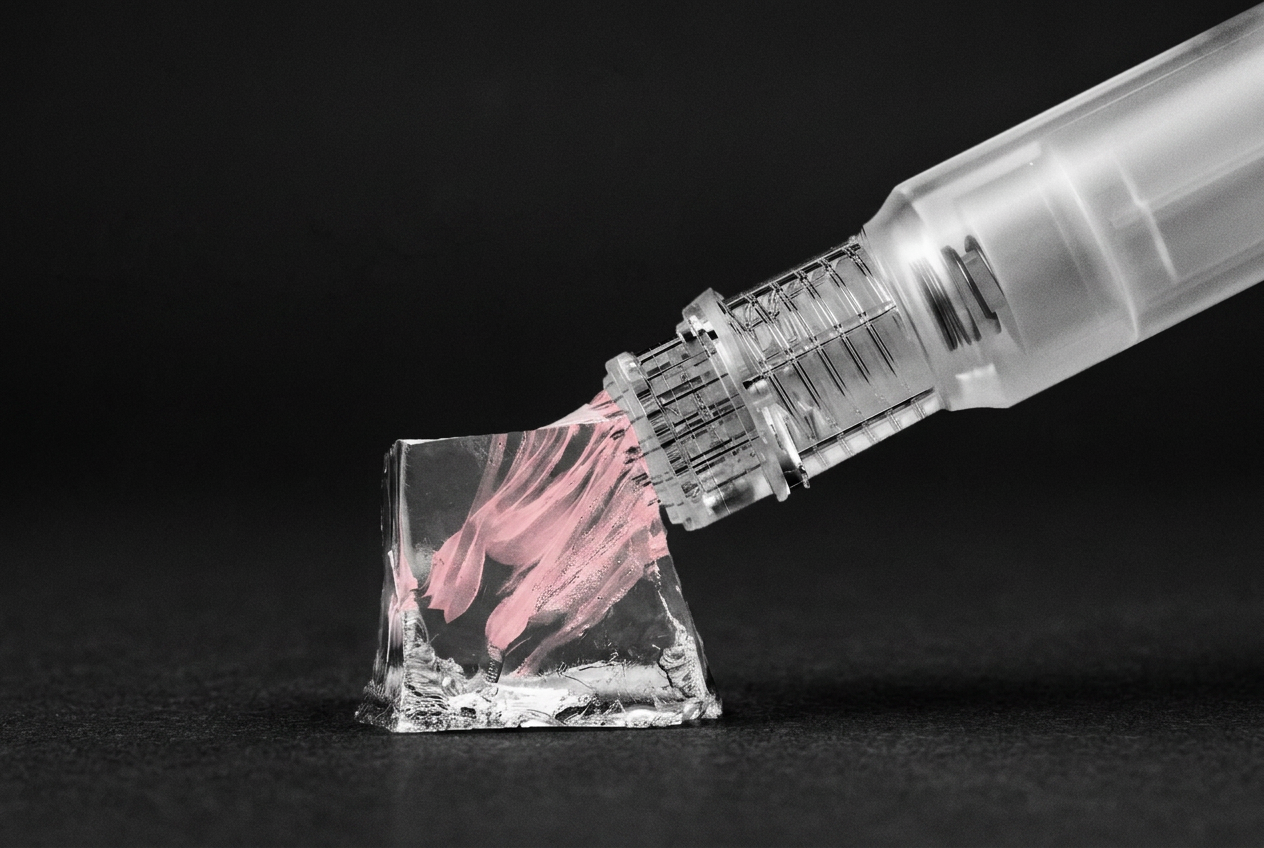
This shift toward needle-free carboxy therapy is perhaps the clearest sign of the treatment's maturity. By generating carbon dioxide at the surface and driving it into the tissue without a single puncture, these systems make the physiology accessible to a far wider range of skin types and comfort thresholds. The result is a session with no downtime, no bruising, and none of the apprehension that once kept the therapy niche — while preserving the circulatory response that gave it its reputation.
There is also a conceptual reason the idea resonates now. Modern skin care has grown fascinated by signalling — the notion that the most elegant interventions do not impose a result but prompt the skin to produce one itself. Carboxytherapy is a near-perfect expression of that philosophy. It introduces almost nothing of substance; it simply changes the conditions and lets the body respond. The treatment is less a deposit than a nudge.
“Healthy skin begins with healthy tissue function. By improving oxygen delivery and supporting microcirculation, needle-free carboxy therapy represents a gentle yet effective approach to restoring hydration, vitality and overall skin quality without downtime.”— Dr. Tea Brozičević
It rewards realism, too. A single session brings a flush of circulation and a temporary glow; the structural benefits accrue across a series, as repeated stimulation accumulates. The honest practitioner frames it as a course rather than a cure, a way of training tissue toward better function over weeks.
What lingers, after the science, is the metaphor. A treatment that improves the skin by teaching it to breathe sits comfortably in an era drawn to the idea of working with the body rather than against it. Carboxytherapy does not overwhelm the skin. It reminds it of something it already knows how to do — and steps back to let it happen.
For those curious about the needle-free approach in practice, the CO2 Carboxy system offers a considered example of where the therapy is heading.
References
- Brandi C, et al. Carbon dioxide therapy in the treatment of localized adiposities. Aesthetic Plastic Surgery, 2001.
- Nach R, et al. Carboxytherapy: effects on skin. Journal of Cosmetic Dermatology, 2010.
- Pianez LR, et al. Effectiveness of carboxytherapy in the treatment of cellulite. Clinical, Cosmetic and Investigational Dermatology, 2016.
- Lee GS. Carboxytherapy in aesthetic medicine: a review. Archives of Aesthetic Plastic Surgery, 2018.